


¿Sabías que el dueño del coche puede ser demandado, no solo el conductor?
La mayoría de la gente solo sabe que debe demandar al conductor. En Florida, a menudo también se puede demandar al propietario, y su cobertura puede ser mucho mayor.

Responsabilidad indirecta en Florida y la doctrina del instrumento peligroso: ¿Quién es realmente responsable en los accidentes de tráfico?
La mayoría de las personas involucradas en un accidente automovilístico en Tampa Bay se centran exclusivamente en el conductor que causó el choque. Es comprensible. Pero hay algo importante que saber: en Florida, el propietario del vehículo también puede ser considerado legalmente responsable, incluso si no estaba dentro del auto y aunque no haya sido negligente al prestárselo al otro conductor.
Esto no es una cuestión técnica. Se trata de una doctrina legal llamada "responsabilidad indirecta", una doctrina de larga data que protege a las víctimas de accidentes desde hace más de un siglo y que puede cambiar significativamente la indemnización que usted puede recibir.
Entonces, ¿qué es exactamente la responsabilidad indirecta?
La responsabilidad indirecta es el concepto legal según el cual una persona puede ser responsable de las acciones de otra. Generalmente, es necesario demostrar tres elementos, que son:
- Una relación jurídica reconocida como principal-agente, padre-hijo, propietario-conductor del vehículo, y hasta la relación empleador-empleado;
- El autor principal incurre en una conducta negligente que causa daño a alguien;
- Y la negligencia se produjo mientras el autor principal realizaba tareas, funciones, etc., dentro del ámbito de la relación jurídica reconocida.
La doctrina jurídica de la responsabilidad indirecta es de naturaleza amplia y funciona como una telaraña o puente que conecta otras doctrinas jurídicas como respondedor superior y el doctrina del instrumento peligroso.
¿Cómo afecta la doctrina del instrumento peligroso a la responsabilidad por accidentes de tráfico en Tampa Bay?
En Florida, somos un estado de culpa comparativa modificada, lo que significa que cada persona es responsable solo por su parte proporcional de negligencia. Sin embargo, en el contexto de los accidentes automovilísticos en Florida, el propietario de un vehículo estará sujeto a una responsabilidad objetiva estándar para las acciones negligentes del conductor permisivo según la ley de Florida doctrina del instrumento peligroso. Esto significa que la víctima en un caso de accidente automovilístico puede reclamar una indemnización por daños y perjuicios contra el conductor, el propietario o ambos. Los fundamentos de la doctrina del instrumento peligroso se basan en la teoría de que la persona que origina el peligro al confiar el automóvil a otra es quien mejor puede garantizar que existan los recursos adecuados para pagar por su operación negligente. Véase Kraemer v. Gen. Motors Acceptance Corp., 572 So. 2d 1363, 1365 (Fla. 1990)
También debes saber que Florida doctrina del instrumento peligroso Se originó a través del derecho consuetudinario y fue adoptado en Florida alrededor de 1920. Véase Southern Cotton Oil Co. v. Anderson, 80 Fla. 441, 86 So. 629 (Fla. 1920); Véase también Emerson v. Lambert, 374 So.3d 756, 757 (Fla. 2023). Y significa que los propietarios de artículos inherentemente peligrosos (como los automóviles) serán estrictamente responsables por los daños causados por ese artículo, en este caso los automóviles, con pocas excepciones. Por ejemplo, tu amigo podría ser conocido como el conductor más seguro del mundo, entonces ¿cómo podrías ser negligente por prestarle tu vehículo? Bueno, según la doctrina del instrumento peligroso Si él o ella está conduciendo en Tampa Bay por la Interestatal 75 incorporándose a la Veterans Expressway de Tampa Bay (SR 589) y causa un accidente, usted (el propietario del vehículo) y su amigo son ambos responsables.
Estas son las situaciones más comunes en la vida real:
- Le prestaste tu coche a un amigo o familiar. Si tienen un accidente, según la ley de Florida, usted, como propietario, será civilmente responsable junto con el conductor.
- Un empleado conducía un vehículo de la empresa. Si provocan un accidente laboral en Tampa Bay, el empleador puede ser considerado responsable. Aquí es donde la responsabilidad indirecta se superpone con la responsabilidad del empleador, tema que abordamos en nuestra guía sobre la responsabilidad del empleador.
- Un adolescente usó el coche familiar. Los padres suelen asumir que la negligencia de sus hijos recae únicamente sobre ellos. En Florida, si el auto le pertenece, usted es estrictamente responsable de las acciones de su hijo como conductor autorizado.
¿Existe algún límite en la cantidad que puede deber el propietario de un vehículo?
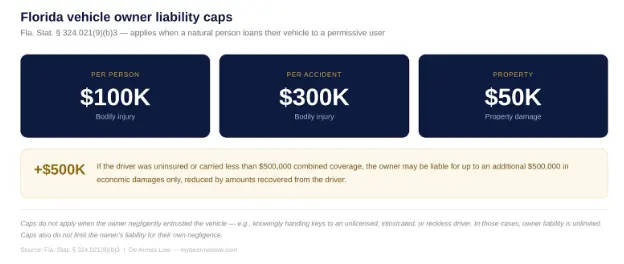
Sí. Si bien la doctrina de instrumento peligroso de Florida se deriva del derecho consuetudinario, la legislatura de Florida la ha codificado a través del Estatuto de Florida 324.021(9)(b)3 que establece límites a la cantidad que un propietario que no conduce puede estar obligado a pagar: 100.000 por persona lesionada, 300.000 por accidente por lesiones corporales y 50.000 por daños a la propiedad.
Esos límites son importantes, pero tienen una excepción crucial. Si el propietario fue negligente al confiar el vehículo, es decir, si entregó las llaves a alguien que sabía que no tenía licencia, estaba ebrio o era un conductor peligroso, es posible que los límites no se apliquen y el propietario podría enfrentar una responsabilidad mucho mayor. Además, si el conductor negligente no tiene seguro o su cobertura combinada de daños a la propiedad y lesiones corporales es inferior a 150.000 dólares, el propietario puede ser responsable por 150.000 dólares adicionales.
¿Qué pasaría si alguien se llevara el coche sin permiso?
La mera propiedad no implica automáticamente responsabilidad. Si alguien se apropia de su vehículo sin su consentimiento, por lo general usted no es responsable de lo que haga con él. La responsabilidad del propietario, según la doctrina del instrumento peligroso, depende de si permitió o no que la otra persona condujera.
Consejo: Si tiene adolescentes en casa que se acercan a la edad de conducir, conviene hablar tanto con su abogado como con su agente de seguros sobre cómo las decisiones sobre la titularidad y la cobertura podrían afectar la responsabilidad civil de su familia.
¿Por qué importa esto si usted resultó herido?
Porque puede afectar su reclamación por conductor con seguro insuficiente (si corresponde) y también abre más vías de compensación. En lugar de limitarse a lo que cubre el seguro del conductor, también puede tener derecho a reclamar contra:
- La póliza de seguro personal del propietario del vehículo
- Los bienes personales del propietario del vehículo en casos graves
- Una póliza de seguro comercial si el vehículo era propiedad del empleador.
En los accidentes con lesiones graves, esta distinción suele ser la diferencia entre una recuperación parcial y una recuperación total.
Preguntas frecuentes
- ¿Puedo demandar al dueño del auto si no estaba dentro del vehículo? Sí. Bajo la teoría de la “responsabilidad indirecta” y su interacción con la ley de Florida doctrina del instrumento peligroso, Las reclamaciones contra los propietarios pueden seguir adelante incluso cuando estos no estuvieran presentes, siempre y cuando el conductor tuviera permiso para usar el coche.
- ¿Esto se aplica también a los coches de alquiler? Las empresas de alquiler de vehículos gozan de una protección especial en virtud de la Enmienda Graves, una ley federal que, en general, las exime de responsabilidad objetiva. Sin embargo, aún pueden ser responsables si alquilaron un vehículo a sabiendas de que no era seguro.
- ¿Qué ocurre si el propietario y el conductor son la misma persona? En ese caso, no existe separación de responsabilidades. El conductor y el propietario son la misma persona, y se aplican las normas estándar de negligencia.
- ¿Cubre el seguro de automóvil convencional las reclamaciones por responsabilidad indirecta? Sí.
- ¿Y si yo tuve parte de la culpa en el accidente? En Florida rige una regla de negligencia comparativa modificada. Si se determina que usted tuvo más culpa que la establecida en el artículo 50%, no podrá recibir indemnización. Si su culpa es menor que la establecida en el artículo 50%, su compensación se reducirá proporcionalmente a su grado de responsabilidad.
¿Sufrió lesiones en un accidente en Tampa Bay, Orlando o en cualquier lugar del centro de Florida? Es posible que varias partes deban indemnizarle. Contáctanos hoy. Tampa: 813-680-7777 | Orlando: 407-362-7777 | Pinellas: 727-260-7777. No se cobra nada a menos que ganemos.
Descargo de responsabilidad: La información aquí contenida es solo para fines informativos, no crea una relación abogado-cliente y no pretende ser, ni debe considerarse, asesoramiento legal. Nos esforzamos por garantizar la precisión, pero es posible que parte de la información quede desactualizada o ya no sea aplicable. Los resultados legales varían según las circunstancias individuales. Los resultados anteriores no garantizan resultados iguales o similares.
Comparte esta publicación
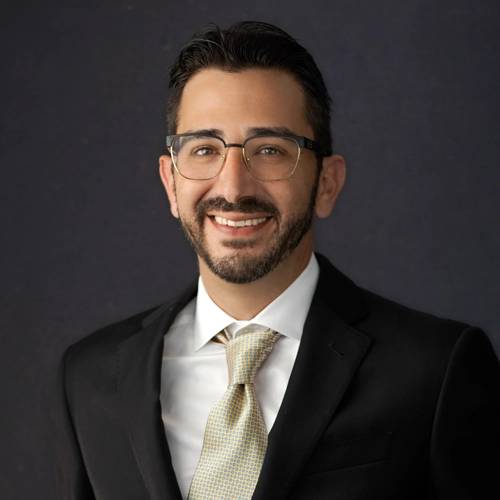
Acerca del autor: Jonathan De Armas, Esq
Jonathan De Armas, Esq., es el fundador de De Armas Law, que atiende a familias en Tampa y Orlando. Exdefensor público y abogado defensor de seguros, ahora defiende a las víctimas de lesiones con experiencia, integridad y atención personalizada.


 Sitio web por