


Steps to Take After a Car Accident in Florida: A Timeline Guide
There's a 14-day deadline, a 10-day deadline, and a 2-year deadline after a Florida car accident — do you know all three?

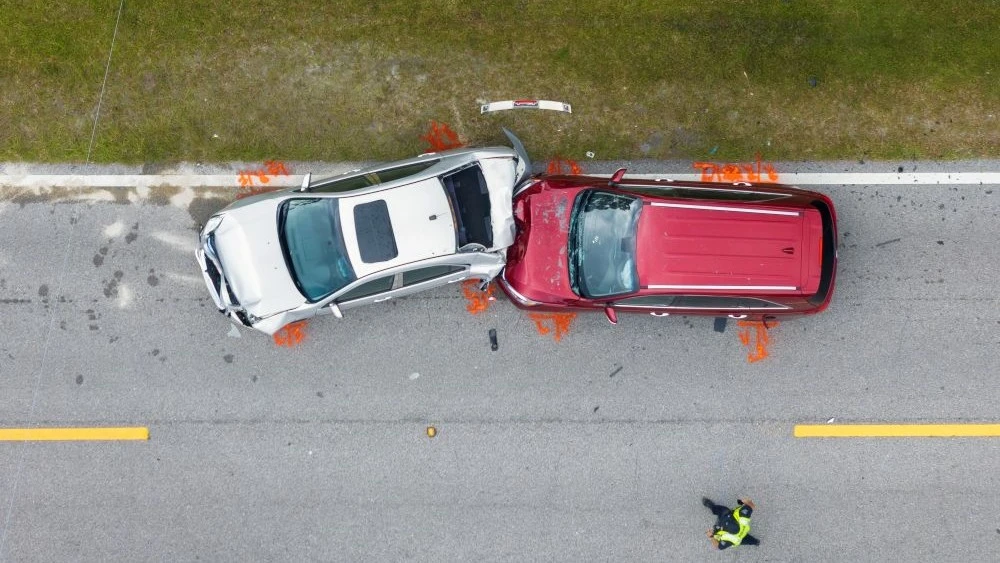
In 2025, over 50,269 car crashes were reported across Hillsborough and Orange counties, leaving people like you in heart-pounding chaos and shock, wondering what to do next. The hard truth is that the car accident steps you take in the hours and days that follow matter enormously in protecting your rights and claim. This guide outlines what to do after a car accident in Florida — organized by timeline — so you can navigate Florida’s no-fault insurance system, strict reporting windows, and updated filing deadlines without missteps.
Phase 1: At the Scene — What to Do in the First Minutes
The moments after a crash are chaotic, but the first few car accident steps below will lay the foundation for everything that follows.
- Check for injuries and call 911. Even if you feel fine, call for medical help immediately. Adrenaline can mask concussions, soft tissue injuries, and internal trauma. A documented emergency call creates an immediate official record.
- Accept medical attention at the scene. If EMS responds, let them evaluate you, even if you feel fine. Refusing treatment creates a gap in your medical record that insurers will use to argue your injuries weren’t serious, or didn’t happen at the scene. An on-site evaluation establishes an immediate timeline connecting the crash to your injuries.
- Stay at the scene. Florida law requires you to remain until law enforcement allows you to leave. Leaving is a criminal offense regardless of who caused the accident — consequences range from a misdemeanor for property-damage-only crashes under §316.061 to a first-degree felony with mandatory prison time if death results under §316.027. Under §316.062, every driver involved in a crash — regardless of severity — must provide their information to the other party and to law enforcement. If anyone is injured, that duty extends to rendering reasonable aid.
- Reposition vehicles if safe. If the accident is minor and vehicles are drivable, moving off active traffic lanes prevents further hazard and does not violate your duty to remain under §316.061 or §316.027. In fact, §316.061(2) specifically requires that stops be made without obstructing traffic more than necessary, and that drivers make every reasonable effort to move an obstructing vehicle.
- Call law enforcement. Under Florida Statute §316.065, you must notify law enforcement of a crash involving injury, death, or apparent property damage of $500 or more. Under §316.066, responding officers must investigate and prepare an official crash report. If police don’t respond, you must self-report to the FLHSMV within 10 days under §316.066(1)(e) — see Phase 2 for details.
- Do not admit fault. Even “I’m sorry” can be used against you. Stick to observable facts when speaking with law enforcement — your statements become part of the official record.
- Exchange information. Collect the other driver’s name, address, license number, registration, and insurance carrier and policy number. If police respond, they will typically provide a Florida Driver Exchange of Information form for both parties. If the other driver refuses or cannot produce proof of insurance, ensure it is documented in the officer’s report. A driver who refuses to provide required information commits a non-criminal traffic infraction under §316.062.
- Thoroughly document the scene. Use your phone to photograph vehicle positions, license plates, road and weather conditions, visible injuries, street signs, and nearby business cameras that may have captured the crash.
- Collect witness names and contact details before anyone leaves.
Tip: Don’t post anything about the accident on social media. Photos, check-ins, and status updates can be used by insurers to dispute the severity of your injuries. What feels like an innocent post can become evidence against your claim.
Phase 2: The First 14 Days — Protect Yourself and Start Your Claim
Once you’re away from the scene, the next steps in the car accident process involve making the right notifications and hitting Florida’s critical deadlines. Here’s what needs to happen, and fast:
- Notify your insurance company promptly. Most policies require timely accident reporting. Failure to do so can result in delayed claims processing or outright denial, regardless of who caused the crash.
- Do NOT give a recorded statement to the other driver’s insurer. You have no legal obligation to speak with them. Adjusters are trained to ask questions that reduce or eliminate your claim’s value. Do not engage without legal guidance.
- Get medical attention within 14 days. Under Florida Statute §627.736, you must be treated within 14 days of the accident to qualify for Personal Injury Protection (PIP) benefits — up to $10,000 covering 80% of medical expenses and 60% of lost wages, regardless of fault. That full $10,000 only applies if an eligible provider — an M.D., D.O., physician assistant, or ARNP — determines you have an Emergency Medical Condition. Without that determination, you’re capped at $2,500 under §627.736(1)(b). The 14-day window is a qualification deadline, not a treatment cap — once you qualify, PIP covers ongoing care as long as it remains reasonable and necessary.
- Start a dedicated accident file. Log medical symptoms, missed work days, out-of-pocket expenses, and all communications related to the crash from now on.
- File a crash report if the police did not respond. Under Florida Statute §316.066(1)(e), you must submit a Driver Report of Traffic Crash (HSMV Form 90010S) to the FLHSMV within 10 days if no law enforcement report was filed. If police did respond, the report was filed under §316.066(1)(a) — request your copy through the Florida Crash Portal as soon as it’s available, usually within 10 days. The crash report is the official record of what happened — insurers and attorneys use it to establish fault, document damages, and build your claim. Without it, you’re fighting on their terms.
Contact Our Car Accident Attorney: Without representation, you’re navigating recorded statements, fault disputes, and settlement pressure alone, while adjusters work to minimize your payout. At De Armas Law, Jonathan has experience working on the defense side of personal injury cases, giving him unique insight into how insurance companies evaluate claims and how to protect your words and actions. Learn why it’s worth getting a car accident attorney →
Phase 3: Weeks 2–8 — Insurance Negotiations and Building Your Case
With the immediate window behind you, the focus shifts to what you’re owed and making sure insurers don’t lowball you.
- Do not accept any early settlement offer without legal guidance. Insurance companies move fast with initial offers because they know those offers don’t account for future treatment costs, long-term wage loss, or pain and suffering. Once you sign, it’s over.
- Understand the serious injury threshold. Under Florida Statute §627.737, you can step outside Florida’s no-fault system and pursue the at-fault driver directly — for full damages including pain and suffering — if your injuries involve significant and permanent loss of an important bodily function; permanent injury within a reasonable degree of medical probability; significant and permanent scarring or disfigurement; or death.
- Know how fault affects your recovery. Under Florida Statute §768.81, Florida’s modified comparative negligence rule bars you from recovering any damages if you are found more than 50% at fault. At 50% or less, your compensation is reduced proportionally. Insurers will attempt to inflate your fault percentage to trigger this bar — that’s why legal representation is critical.
- Check if the at-fault driver was uninsured or underinsured. UM/UIM coverage under Florida Statute §627.727 becomes your primary compensation path, but only if you purchased it. Unlike PIP, it’s not mandatory in Florida and can be waived. Under §627.727(7), UM/UIM coverage for pain, suffering, and non-economic damages is subject to the serious injury threshold under §627.737 — it doesn’t automatically unlock full non-economic recovery. If the at-fault driver had no insurance, the same rules apply.
Phase 4: Up to 2 Years — Know Your Legal Filing Deadline
If your injuries warrant pursuing the at-fault driver beyond PIP, your filing window is non-negotiable. Under Florida Statute §95.11(4)(a), personal injury claims from accidents on or after March 24, 2023, must be filed within 2 years — reduced from 4 years under HB 837. Don’t count down to this deadline, work inside it from day one — evidence degrades, witnesses disappear, and insurers use delay as leverage. Miss it, and you lose your compensation right, regardless of the other driver’s fault. If that window is approaching, one call to De Armas Law can protect everything you’re owed. For a full breakdown of Florida’s deadlines by claim type, see How Long After a Car Accident Can You File a Claim?
Have Questions About These Car Accident Steps?
You’re not the first to have questions after an accident, and you won’t be the last — here’s what people ask us most:
- Does PIP Cover Me If I Were a Passenger in Someone Else’s Car? Yes, your own PIP coverage follows you as a person, not just as a driver of your own vehicle, under §627.736.
- Does PIP Apply If I Was Riding a Motorcycle During the Accident? No. Florida Statute §627.736 excludes motorcycles from PIP coverage. Motorcycle riders have different insurance protections and legal considerations — see our Florida Motorcycle Accident Claims guide for more.
- What If a Family Member Was Killed? Wrongful death claims are governed by Florida’s Wrongful Death Act and carry a separate 2-year statute of limitations, starting from the date of death. The eligible claimants and recoverable damages differ from personal injury claims — contact us directly to understand your family’s rights.
- Will Filing a PIP Claim Raise My Insurance Premiums? Under Florida Statute §626.9541, insurers are generally prohibited from raising your rates or canceling your policy solely because you filed a claim for an accident that was not your fault.
Your Next Step After a Car Accident in Florida Is Simple — Call Us.
We know this guide covers a lot, and the last thing you want right now is more paperwork, more phone calls, and more stress. Here’s what to do: call us. Jonathan spent years on the insurance defense side — he knows their playbook cold, and now he uses it to protect people like you. You get his personal cell number, direct access from day one, and a team that doesn’t stop fighting until you’re fairly compensated. No upfront cost, no fees unless we win, and no being treated like a case number. One call changes everything. Tampa: 813-680-7777 | Orlando: 407-362-7777 — available 24/7. Or schedule a free case review online.
Disclaimer: The information contained herein is for informational purposes only, does not create an attorney-client relationship, and is not intended, and should not be relied upon, as legal advice. We strive to ensure accuracy but some information may become outdated or no longer applicable. Legal outcomes vary based on individual circumstances. Past results do not guarantee the same or similar outcomes.
Share This Post

About The Author: Jonathan De Armas, Esq
Jonathan De Armas, Esq. is the founder of De Armas Law, serving families across Tampa and Orlando. A former public defender and insurance defense attorney, he now fights for injury victims with experience, integrity, and personal attention.




 Website by